
Tesla Roadster Gen 1 vs Gen 2: Specs, Price, Range and Every Major Difference Explained
From the 2008 original to the new Gen 2, here’s how the Tesla Roadster compares on range, speed, battery, price and what those changes actually mean.
• Written by Ben
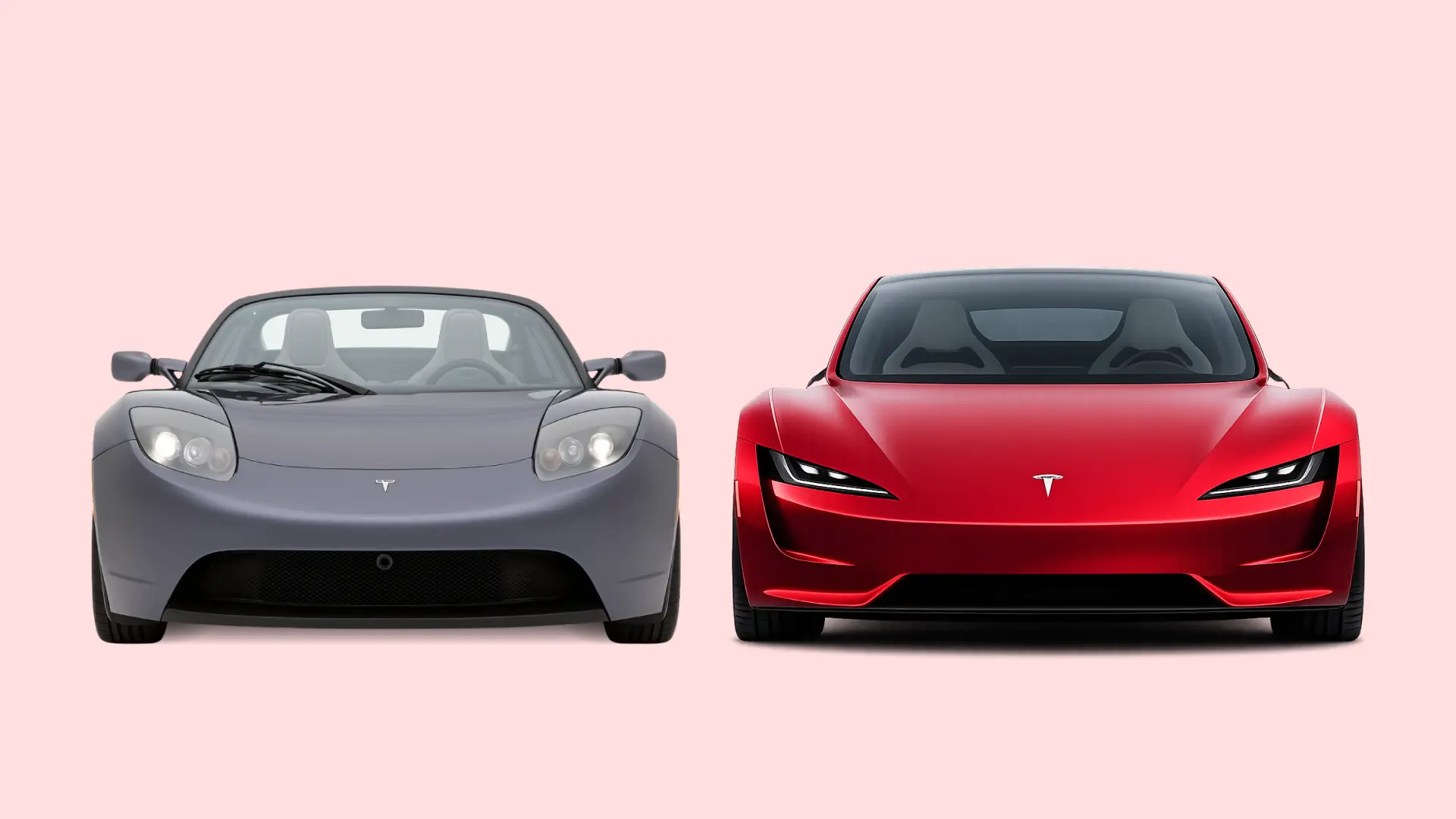
The original Roadster proved EVs could be exciting. Eighteen years later the Gen 2 is aiming for something far bigger: electric supercar status.
Editor’s note: this article will be updated as the Tesla Roadster Gen 2 information, dates, specifications and production details become available.
Tesla may finally show more of the long-delayed Gen 2 Roadster next month, with Elon Musk recently saying a “new Roadster unveil” will “probably” happen in late April. That makes this a good moment to look back (and forward) at just how far Tesla has come by comparing the 2008 original with the new Roadster’s latest claims.

From Proof of Concept to Halo Car
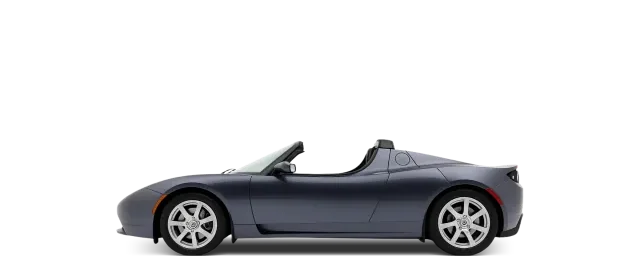
In March 2008, the original Roadster entered regular production as Tesla’s first vehicle. It was designed to prove an EV could be quick, desirable and exciting, and it succeeded. At a time when electric cars were still associated with slow, short-range urban runabouts, the Roadster's 125 mph top speed and 3.9-second 0-60 mph time helped change perceptions of what an electric powertrain could do.
Only around 2,450 were built, and as a compact two-seat sports car with minimal cargo space, it was a world away from the larger, family-friendly Teslas that would later define the brand. See how the rest of Tesla’s line-up compares in size in our Tesla size guide that breaks down the Model 3, Model Y, Model S, Model X, Cybertruck and Roadster.
Eighteen years later, the upcoming Roadster is being positioned as something far more ambitious: an all-electric halo car, a flagship model designed to showcase the best of Tesla’s technology, performance and ambition, with record-breaking targets, supercar numbers, seating for four, a removable glass roof and a claimed 620-mile range.
The real comparison is not simply an old-versus-new spec sheet. It’s about what Tesla now wants the Roadster to represent. Gen 1 was built to prove a point. Gen 2 is supposed to show just how far Tesla’s technology, confidence and brand ambition have come since then.
This is part of why the anticipation around the new Roadster has become a story in itself. Tesla unveiled the prototype in November 2017, with production originally targeted for 2020, but almost a decade later the car remains undelivered. It's the automotive equivalent of Grand Theft Auto VI: hugely anticipated, endlessly delayed and surrounded by ever-bigger expectations.
So while the wait continues, the most interesting question is how different will the new Roadster really be from the original that started it all?
Tesla Roadster Gen 1 vs Gen 2: the key differences at a glance
Important note: the Gen 2 figures below are Tesla-published claims / pre-production targets, not final independently verified customer-car figures. Tesla’s own reservation agreement says the Roadster is still under development, that exact pricing is not yet confirmed, and that Tesla cannot guarantee when the vehicle will actually be delivered.
| Metric | Roadster Gen 1 (2008–2012) | Roadster Gen 2 (Tesla claim / pre-production target) | Difference |
|---|---|---|---|
| 0–60 mph | 3.9 seconds | 1.9 seconds | 2.0 seconds quicker (51% faster) |
| 0–100 mph | ~11.0 seconds | 4.2 seconds | ~6.8 seconds quicker (62% faster) |
| Quarter mile | 12.7 seconds | 8.8 seconds | 3.9 seconds quicker (31% faster) |
| Top speed | 125 mph | 250+ mph | at least +125 mph faster (100%+) |
| Range | 244 miles | 620 miles | +376 miles (+154%) |
| Drivetrain | Rear-wheel drive | All-wheel drive | Major traction shift |
| Battery | 53 kWh | 200 kWh | +147 kWh (+277%) |
| Seats | 2 | 4 | +2 small rear seats |
| Cargo / trunk space (SAE / EPA) | Very limited luggage space | Tesla pitches 'Tonnes of storage' | Gen 2 promises much more |
| Roof | Manual soft-top | Removable glass roof | More premium, more GT-like |
| Base model price | $109,000 / £81,000 | Around $200,000* / £160,000 | +$91,000 / £79,000 (+83% more expensive) |
* The around $200,000 figure refers to Tesla’s originally announced base price for the new Roadster; Tesla’s live US Roadster reservation page currently shows a $50,000 base reservation rather than a final sale price. Tesla’s live UK Roadster reservation page currently shows an initial £4,000 payment, plus a £34,000 bank transfer payment due in 10 days rather than a final sale price. These amounts could change at any time.
What the numbers actually mean
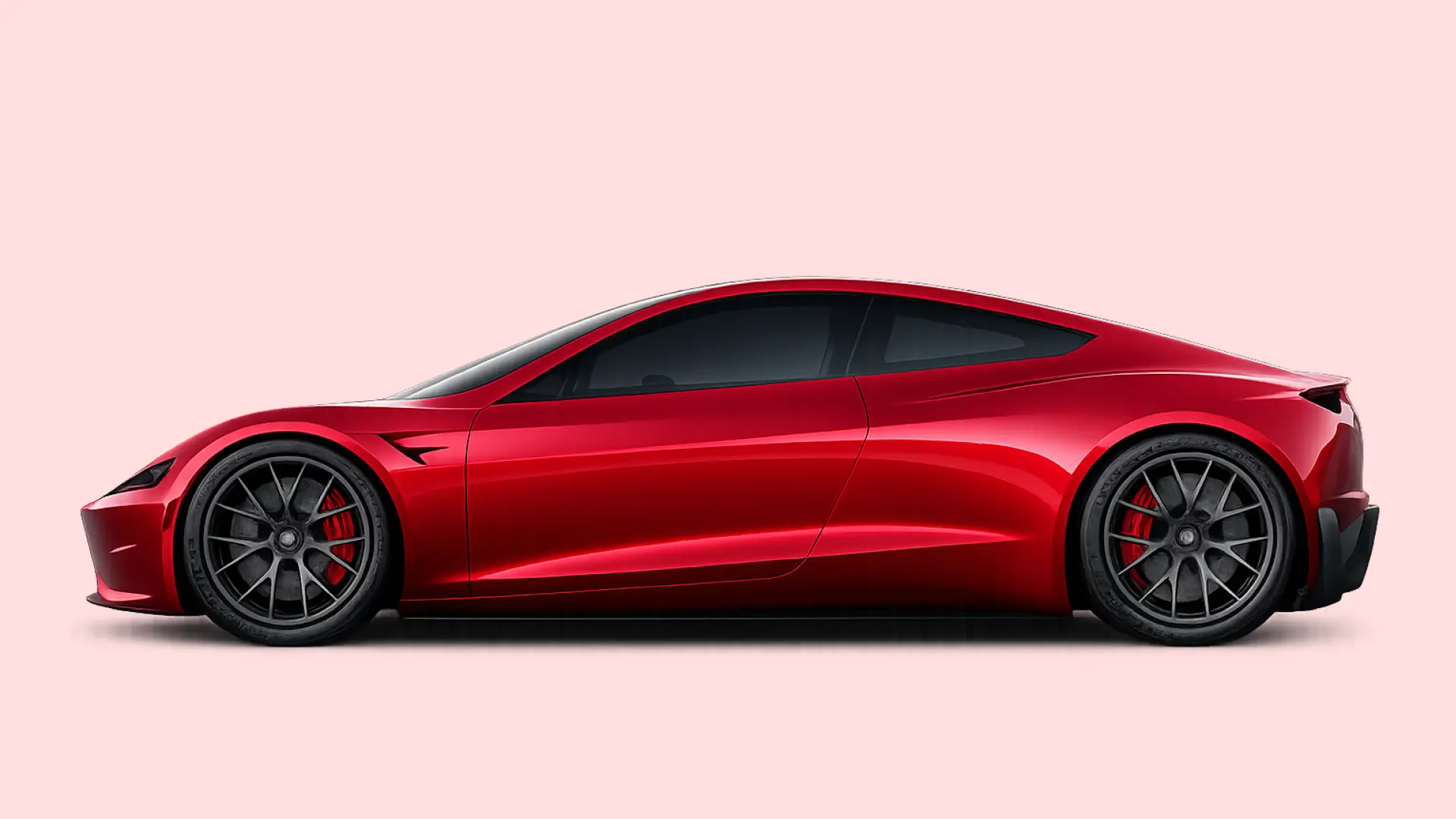
These differences make one thing clear: this is not planned to be a mild successor. On paper, the new Roadster looks less like the usual kind of model update (the sort that brings a little more range, a styling refresh and a few new features) and more like Tesla’s attempt to push the Roadster name into electric supercar territory.
Acceleration
A 3.9 second 0-60 mph was a headline number in the late 2000s. For context, even the Lotus Elise (on which the original Roadster was based), took more than 4.7 seconds to reach 60 mph.
A claimed 1.9-second 0-60 mph would put the new Roadster in a completely different category of performance, cutting 51% off the original car’s time. The same applies at higher speeds. A 0–100 mph time of 4.2 seconds and a quarter mile in 8.8 seconds would, taken together with the 0-60 mph time, place the new Roadster among the fastest-accelerating production cars ever claimed. That is no longer just sports-car fast. That is supercar-fast by any normal standard.
Top speed
The first Roadster topped out at 125 mph. The new car’s claimed 250+ mph target would at least double that figure, pushing it into a completely different class of performance. On paper, that would put it in the same conversation as the world’s fastest supercars and hypercars. Most owners will never get close to 250 mph, of course, but that is not really the point. The number is there to signal ambition. Gen 1 proved an EV could be exciting, while Gen 2 is being framed as the car that could take EV performance to the edge of what is currently possible.
Range
The original Roadster’s 244-mile range was impressive for its time because it proved an electric sports car could go far enough to be taken seriously. At a time when many EVs were still limited to roughly 100 to 150 miles per charge, the Roadster became the first production EV to exceed 200 miles on a single charge.
If Tesla’s claim holds, the new Roadster would add another 376 miles, increasing the range by 154%. That’s the difference between a car that felt groundbreaking for an afternoon drive and one that could, at least in theory, work as a serious long-distance grand tourer.
Drivetrain
The first Roadster was built with rear-wheel drive in the spirit of a classic lightweight sports car needing good handling and acceleration. The new Roadster’s all-wheel drive should improve traction by distributing power to all four wheels, giving it a better chance of deploying those extreme performance figures cleanly and repeatedly. And it makes sense: if it’s trying to hit a claimed sub-two-second 0–60 run, it’ll need every advantage it can get.
Battery
Gen 1’s 53 kWh battery pack was a breakthrough for its time because it gave the original Roadster enough stored energy to travel more than 200 miles on a charge while delivering sports-car performance. Gen 2’s claimed 200 kWh pack is 147 kWh larger and points to a very different brief. This is no longer just about going further on a charge. That 277% battery increase is what allows Tesla to target both supercar-level performance, including 0-60 mph in 1.9 seconds, and the claimed 620-mile range for the new Roadster.
Usability
The original Roadster was an unapologetic two-seater with very limited luggage space. The new Roadster is officially listed by Tesla as seating four, though in practice this looks more like a 2+2 layout with small rear seats rather than a roomy everyday family car. Still, the message is clear. Tesla isn’t aiming for a delicate car that only works on the perfect road, on the perfect day, with limited luggage. It wants to build a usable, practical supercar. That same theme appears again in the removable glass roof, which stores in the boot, and in Musk’s claim that the new Roadster will offer “tonnes of storage”.
How much better is the new Tesla Roadster than the original?
On claimed figures alone, the Gen 2 Roadster is not just better than the original — it’s Tesla’s attempt to take the Roadster from pioneering EV sports car to full electric supercar.
Its claimed range is up by 376 miles. Its battery pack is up by 147 kWh. Its 0–60 time is cut by more than half. Its 0–100 time drops by almost seven seconds. Its top speed target is at least double.
The best way to understand the new Roadster is to see how completely it rejects the limitations of the old one. If Tesla delivers the car it’s promising, the new Roadster will be better in the ways modern buyers are most likely to notice: more range, more traction, more seats, more theatre and a far broader sense of capability. The new Roadster is trying to do something harder than the first: not just legitimise EV performance, but redefine what a modern electric supercar can be.
About the author
Automotive Size Guide Writer and Designer
Ben is a writer and designer at DriveSize, which he has run with Laurence since its launch in 2025. He covers practical vehicle size comparisons, boot and cargo space, parking fit, ground clearance, and the changing dimensions of SUVs, EVs and pickups. His writing focuses on how a car's exterior size relates to its usable space and what those measurements mean for everyday driving. Ben aims to help our readers understand the trade-offs between passenger room, cargo capacity and ease of manoeuvring without treating the largest vehicle or biggest figure as the automatic winner.