
Boot Space Explained: VDA vs SAE, Seats-Up vs Seats-Down & Real-World Usability
VDA vs SAE boot space explained clearly. Seats-up vs seats-down, litres vs cu.ft, and real examples using the RAV4 & CR-V. The best guide there is.
Published • Updated • Written by Ben
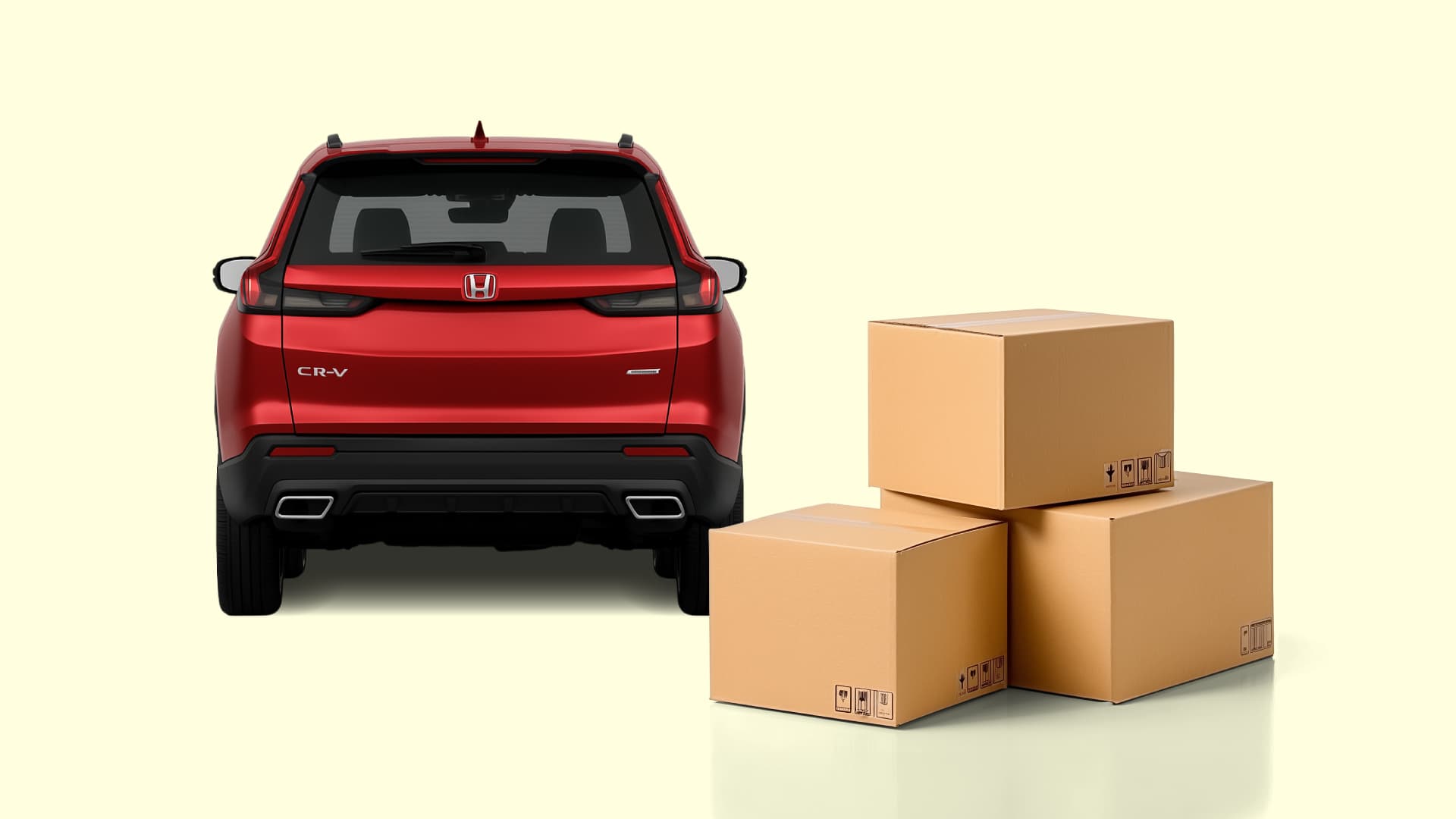
Ever looked at boot space numbers and thought “Why does the US version have double the volume?” Boot space should be simple — but between VDA, SAE, litres, cubic feet, seats-up, seats-down and “to roof” vs “to parcel shelf”, most people end up more confused than informed.
We’ve written this guide to fix that. In plain English, here’s what VDA and SAE actually measure, why the numbers differ, how seats-up vs seats-down changes things, and what really matters when choosing a practical car.
We’ll use the Toyota RAV4 (Combustion 2022) and Honda CR-V (2023) as real examples. The RAV4 publishes both methods for one powertrain; the CR-V figures come from comparable Combustion and Hybrid versions.
By the end, you’ll understand cargo space better than most salespeople.
VDA vs SAE/EPA
The main reason boot space is confusing is because car brands use two different standards. Here’s the difference between them:
VDA method (Europe & Global measurement)
VDA uses rigid 1-litre blocks stacked to fill the boot up to the parcel shelf / top of the back seats. It doesn’t cram blocks into every tiny corner, so it measures usable space.
Seats-down VDA measures to the window line.
SAE / EPA method (USA & North America measurement)
SAE fills the boot with soft bags that squeeze into every gap and measure volume up to the roof — essentially filling the boot to its maximum physical capacity.
It captures space you’d never actually use — so numbers are always larger.
This is why SAE numbers can look 30–60% bigger, and why an SUV can jump from “600 L” to “1,100 L” without the boot changing at all — just the method.
TLDR:
- VDA = usable space
- SAE = total theoretical space
Seats-Up vs Seats-Down — and why the difference matters
Seats-up is the boot measurement, with the back seats in their upright position. It tells you how much the car can hold while carrying backseat passengers.
Seats-down is the measurement of the boot + the space up to the back of the front seats, with the rear seats folded down. It tells you the maximum load for IKEA runs, camping trips, luggage, bikes etc.
But the method you use massively changes the result as VDA measures to the bottom of the windows, and SAE/EPA measures right up to the roof.
Real examples: RAV4 vs CR-V (VDA vs SAE)
Let’s take two popular cars with published figures under both systems. For the CR-V, the VDA figures are for the Hybrid and the SAE figures are for the US Combustion model, so that comparison also reflects powertrain and market differences:
Seats up
Toyota RAV4
580 L VDA (20.5 cu ft) → 1,065 L SAE (37.6 cu ft)
The capacity almost doubles from one measurement method to the other.
Honda CR-V
587 L VDA (20.7 cu ft) → 1,113 L SAE (39.3 cu ft)
The SAE figure is larger, but remember that these CR-V measurements also come from different powertrains and markets.
Seats Down
The same pattern continues:
Toyota RAV4
1,690 L VDA (59.7 cu ft) → 1,977 L SAE (69.8 cu ft)
A difference of 287 L (10.1 cu ft).
Honda CR-V
1,642 L VDA (58.0 cu ft) → 2,166 L SAE (76.5 cu ft)
A difference of 524 L (18.5 cu ft), with the same powertrain-and-market caveat.
This doesn’t mean the CR-V is taller overall. It means the CR-V has a more upright, boxy cargo shape with more “upper-airspace” above the seats, space that SAE counts (because it measures to the roof) but VDA doesn’t (because it measures to the parcel-shelf line).
Is either system “better”?
It depends what you want to find out.
VDA is realistic, it shows how much space you’ll have to comfortably use day-to-day.
SAE is impressive on paper, helpful for comparing US-market cars, but not useful for everyday packing.
If you’re comparing two cars sold in different regions, always check which standard is being used.
The part everyone forgets: shape matters as much as litres
Two cars can have the same boot volume but feel totally different because of:
- A tall, square opening vs a sloped one
- A low load lip vs a high one
- A long flat floor vs stepped sections
- Wheel-arch intrusions
- Underfloor storage
- Wide vs narrow tailgates
This is why Drivesize visuals matter — dimensions tell you how much, but visuals tell you how usable, comparing cars using our ‘Rear view’ mode helps with this.
Final Verdict
For everyday life, VDA gives the truest sense of real space, but SAE is useful for comparing US-market cars.
If a car looks like it has “more boot space” on paper, check if the number is inflated by SAE or measured realistically with VDA — and always look at seats-up vs seats-down separately.
FAQs
Frequently asked questions

About the author
Automotive Size Guide Writer and Designer
Ben is a writer and designer at DriveSize, which he has run with Laurence since its launch in 2025. He covers practical vehicle size comparisons, boot and cargo space, parking fit, ground clearance, and the changing dimensions of SUVs, EVs and pickups. His writing focuses on how a car's exterior size relates to its usable space and what those measurements mean for everyday driving. Ben aims to help our readers understand the trade-offs between passenger room, cargo capacity and ease of manoeuvring without treating the largest vehicle or biggest figure as the automatic winner.