
Smallest Car in the World? Peel P50 vs Today’s City Cars (Sandero, Golf & More)
How tiny is the Peel P50? See it compared to today’s city cars including the VW Golf, Toyota Corolla, Dacia Sandero, VW Polo and ID.3 in real dimensions.
Published • Updated • Written by Ben
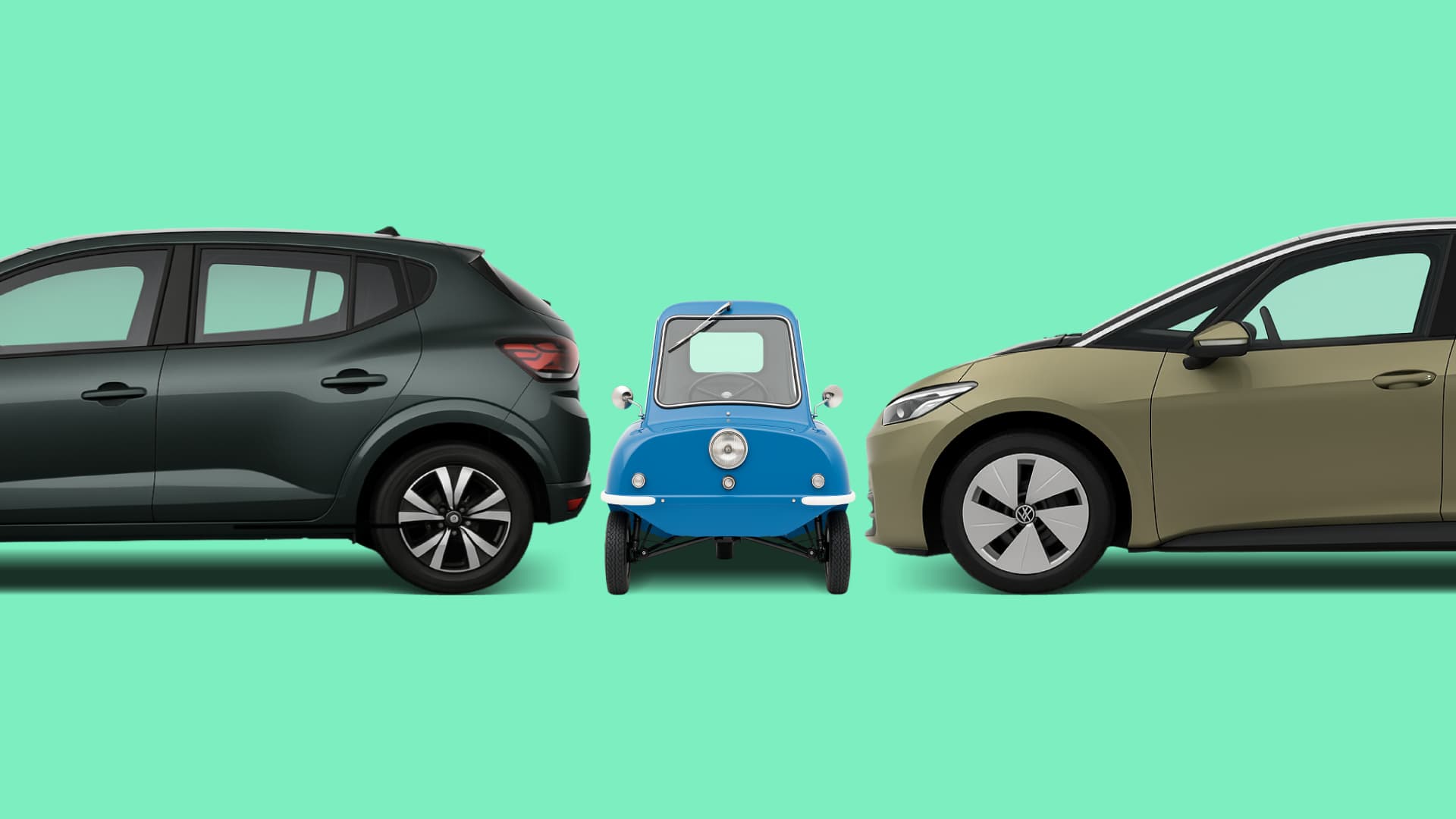
The Peel P50 isn’t just small — it’s absurdly small. Built on the Isle of Man in the early 1960s, it still holds the Guinness World Record as the smallest production car ever made. One door, one seat, three wheels, 137.2 cm long (54.0 in) and, famously, no reverse gear.
Today’s hatchbacks have grown, bulked up with safety tech, bigger cabins and electric platforms. But just how big are these cars compared to the P50?
Here’s the clearest size comparison you’ll find, and see exactly how modern city cars dwarf the world’s tiniest car.
Peel P50 — the tiniest car ever built
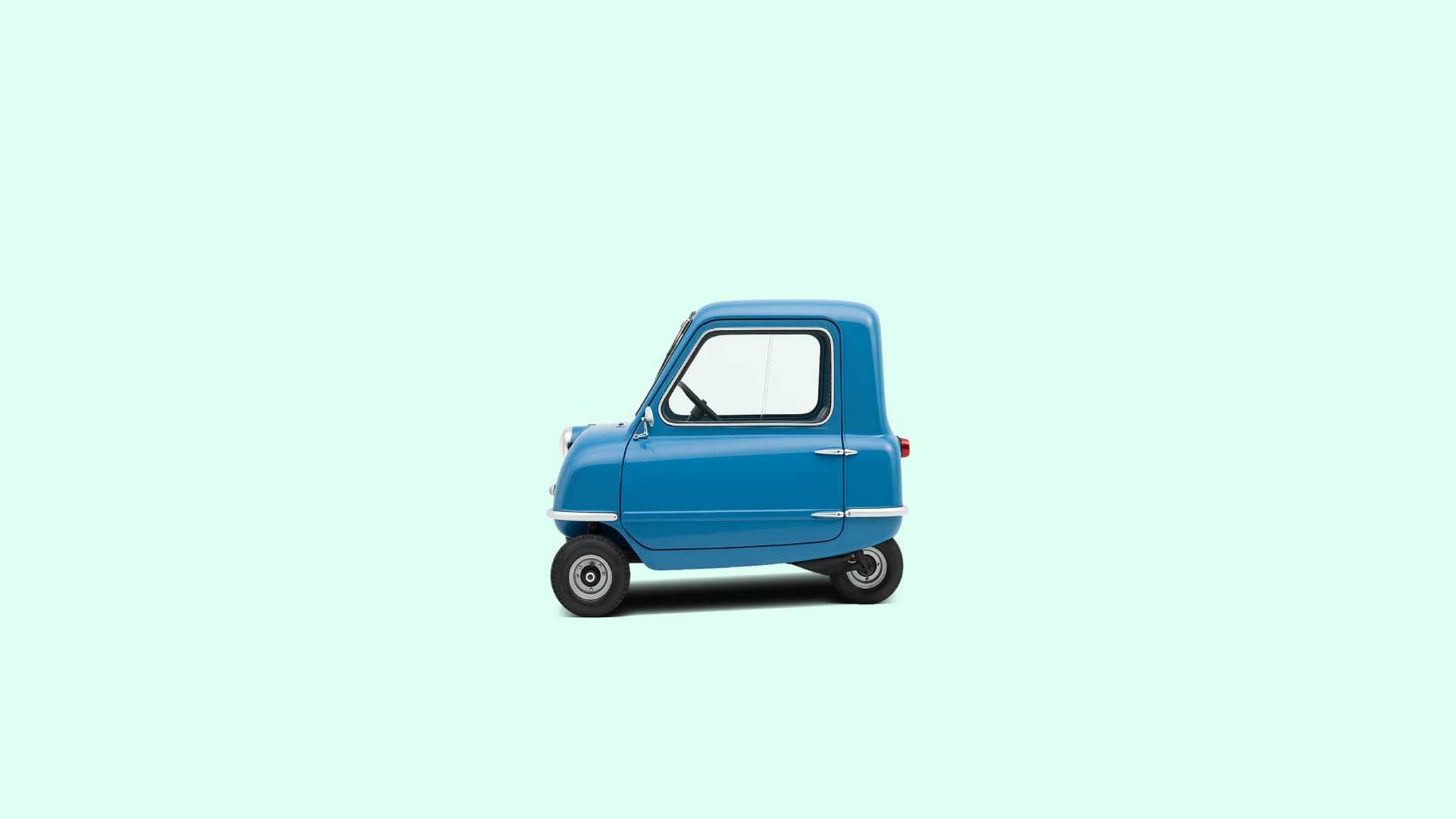
- Length: 137.2 cm (54.0 in)
- Body width: 99.1 cm (39.0 in)
- Height: 120 cm (47.2 in)
- Wheelbase: 120 cm (47.2 in)
- Boot: 0 L!!
- Turning circle: 3.66 m (12.0 ft)
- Kerb weight: 59 kg (130 lb)
The P50 is shorter than some motorbikes. You could park it sideways in a UK parking bay and still open the door (the only door). It weighs barely more than a big dog and has no meaningful storage. It exists purely to commute one person and a sandwich.
How today’s cars compare
We’ve chosen a globally recognised mix of Europe’s best-selling hatchbacks and one modern EV to compare to the P50.
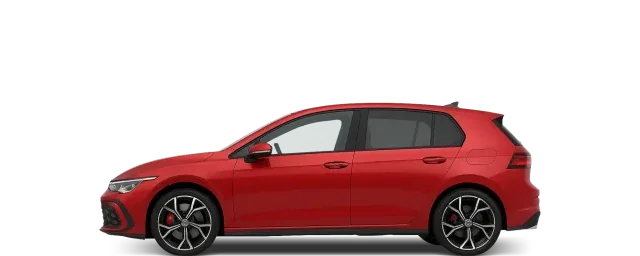
Volkswagen Golf (2024) — the global benchmark hatchback
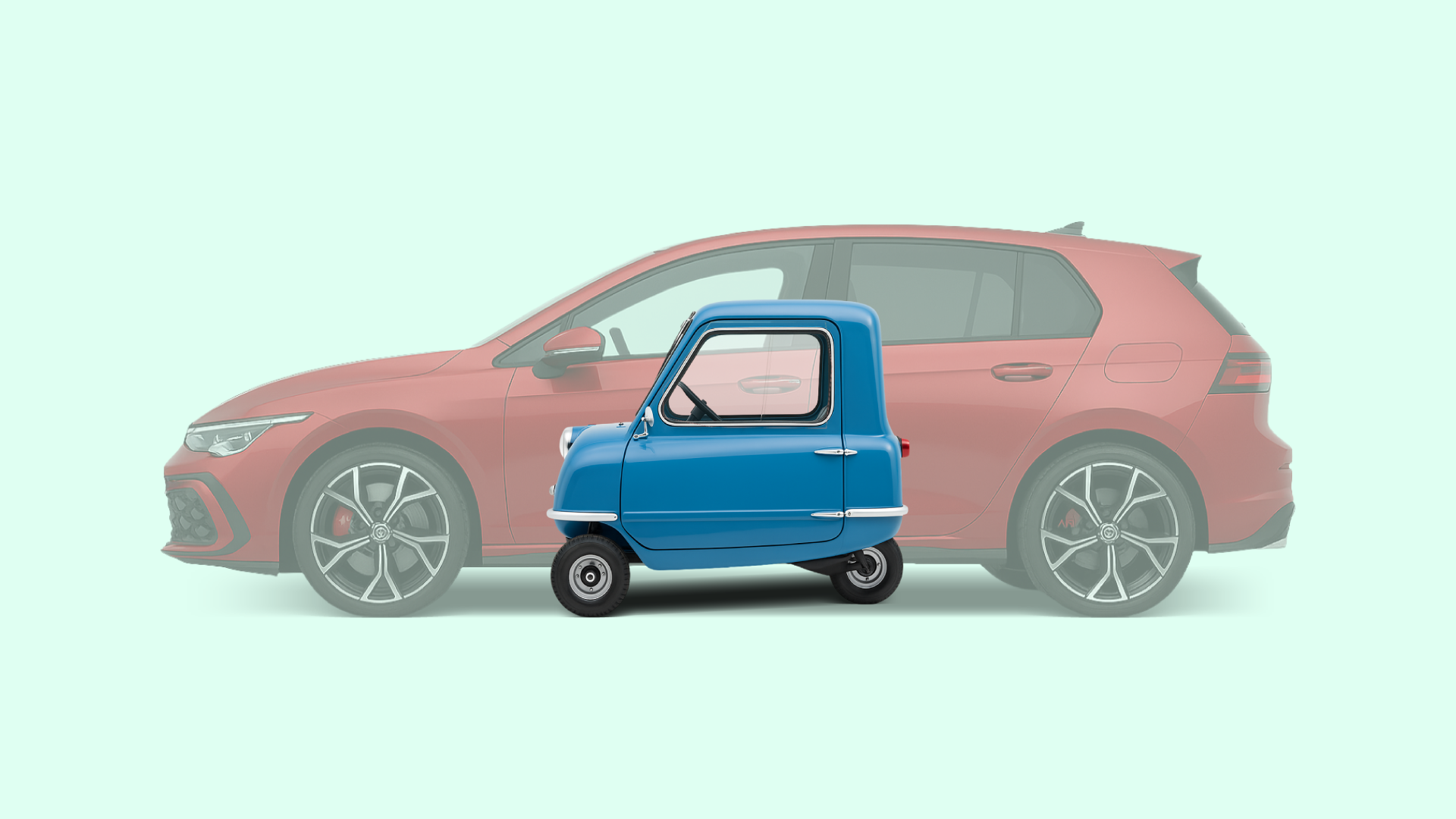
- Length: 428.2 cm (168.6 in). That’s 3.1× longer than the P50.
- Body width: 178.9 cm (70.4 in). That’s 1.7× wider.
- Boot (seats up): 381 L — 381 litres more than the P50, because the P50 has… none.
The Golf shows how far “compact cars” have grown. Park them nose-to-nose and the P50 ends just past the Golf’s front axle.
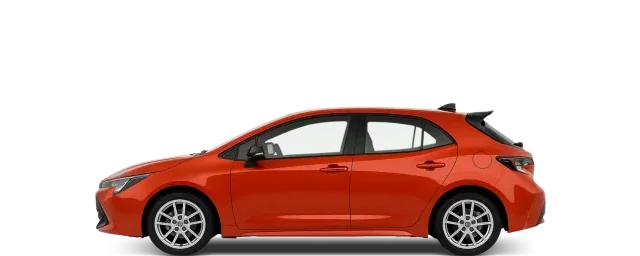
Toyota Corolla Hatchback (2023) — world’s best-selling nameplate
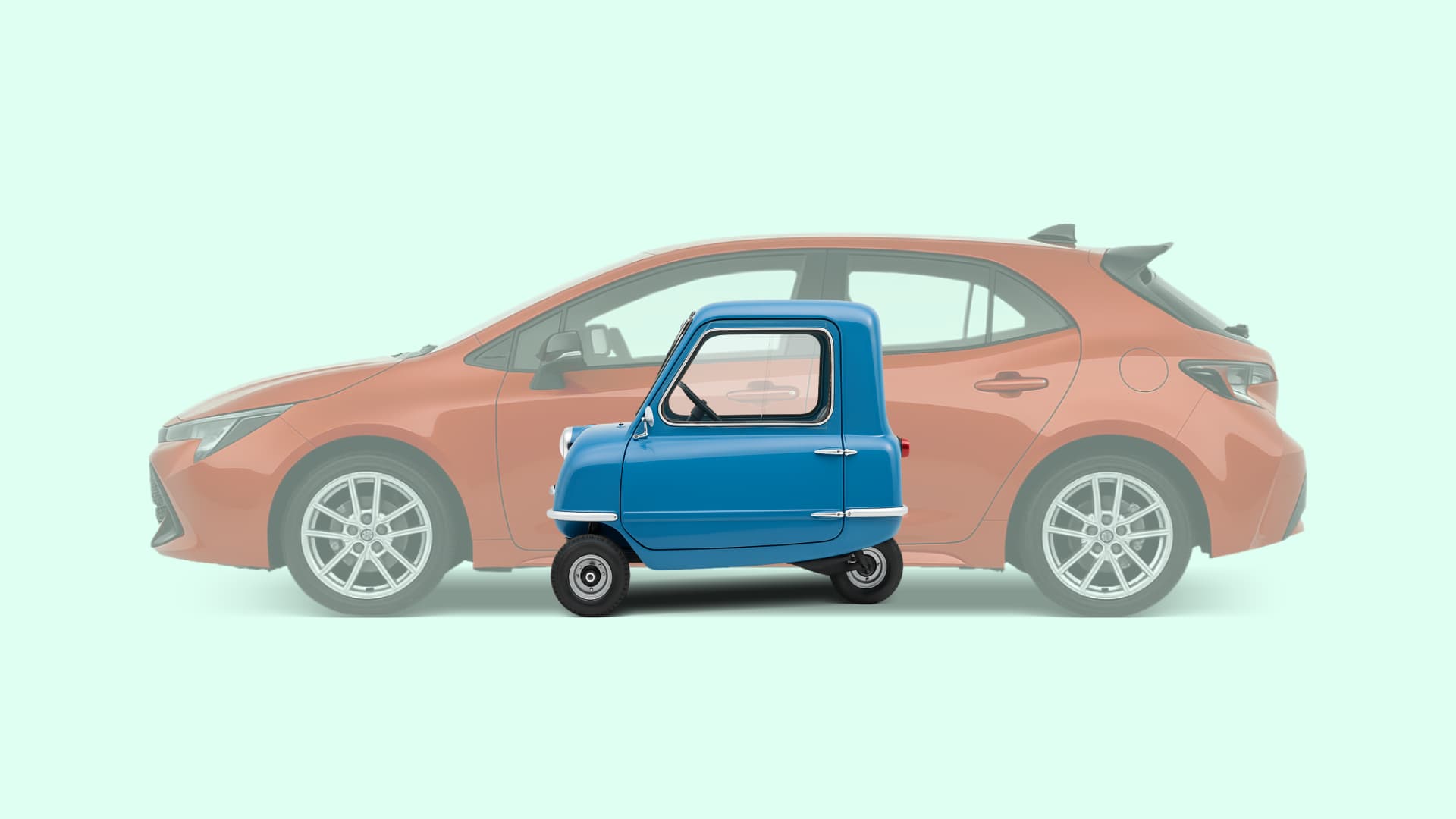
- Length: 436.9 cm (172.0 in)
- Body width: 179.1 cm (70.5 in)
- Boot space: 504 L SAE/EPA for the Combustion model; the Hybrid is rated at 361 L VDA.
A Corolla is about 3.2× the length and roughly 21% taller than the P50. Three P50s placed nose-to-tail would still be shorter than the Corolla.
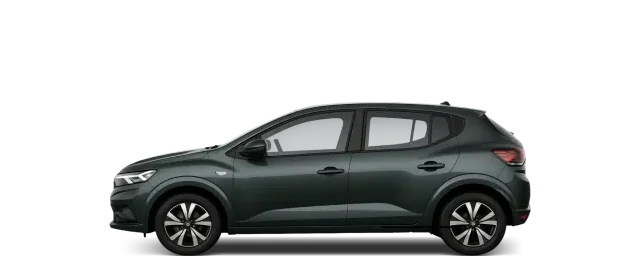
Dacia Sandero (2020) — Europe’s affordability hero
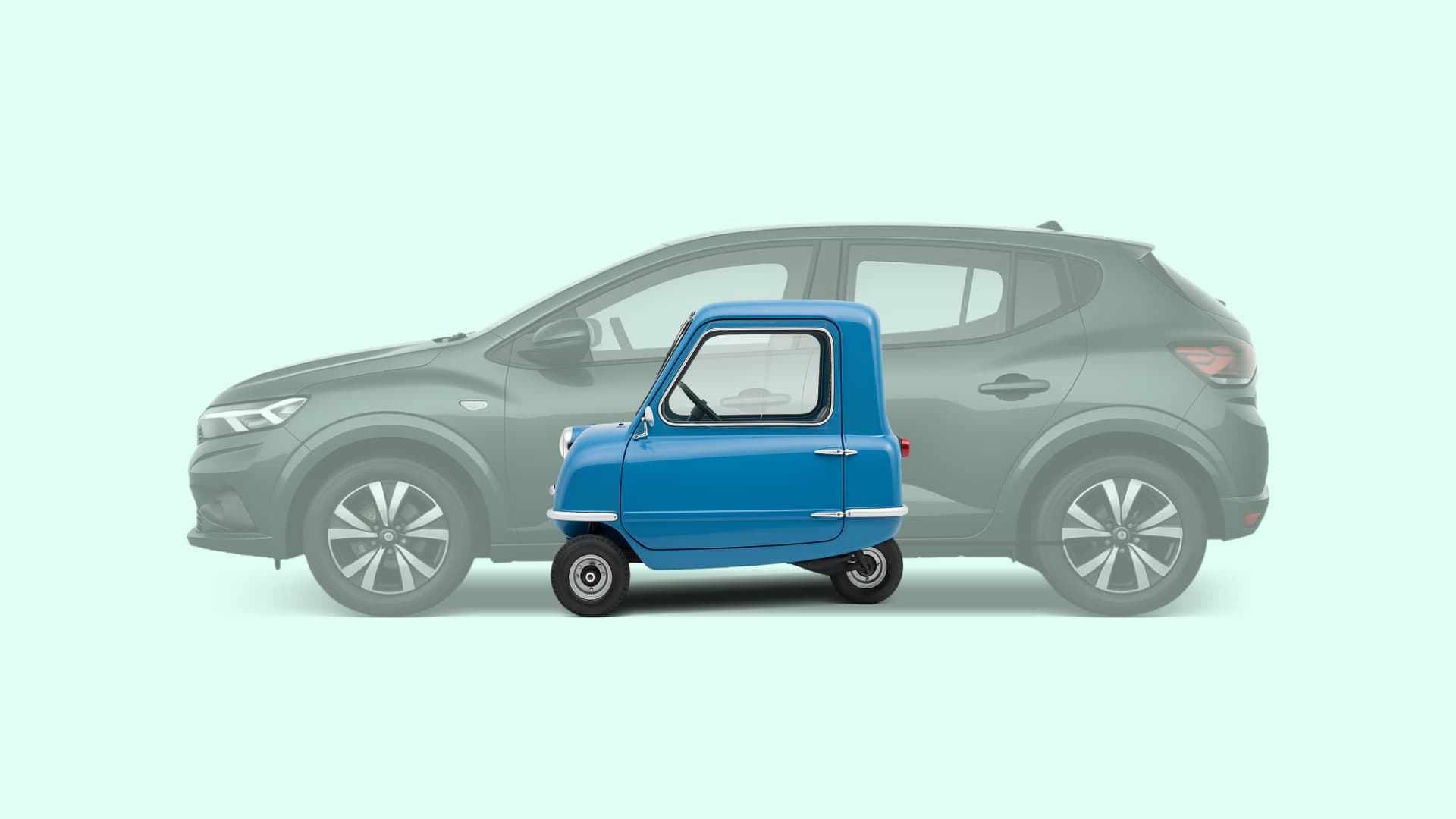
- Length: 408.8 cm (160.9 in)
- Body width: 178.4 cm (70.2 in)
- Height: 149.9 cm (59.0 in)
- Boot space: Up to 1108 L with seats down is roughly 1,108 litres more storage.
One of Europe’s smallest modern hatchbacks, yet it’s still nearly 3 metres (9.8 ft) longer than the P50. Even the Sandero’s wheelbase is almost double the P50’s entire length.
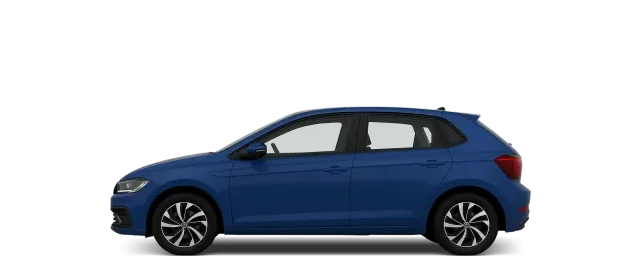
Volkswagen Polo (2021) — the grown-up supermini
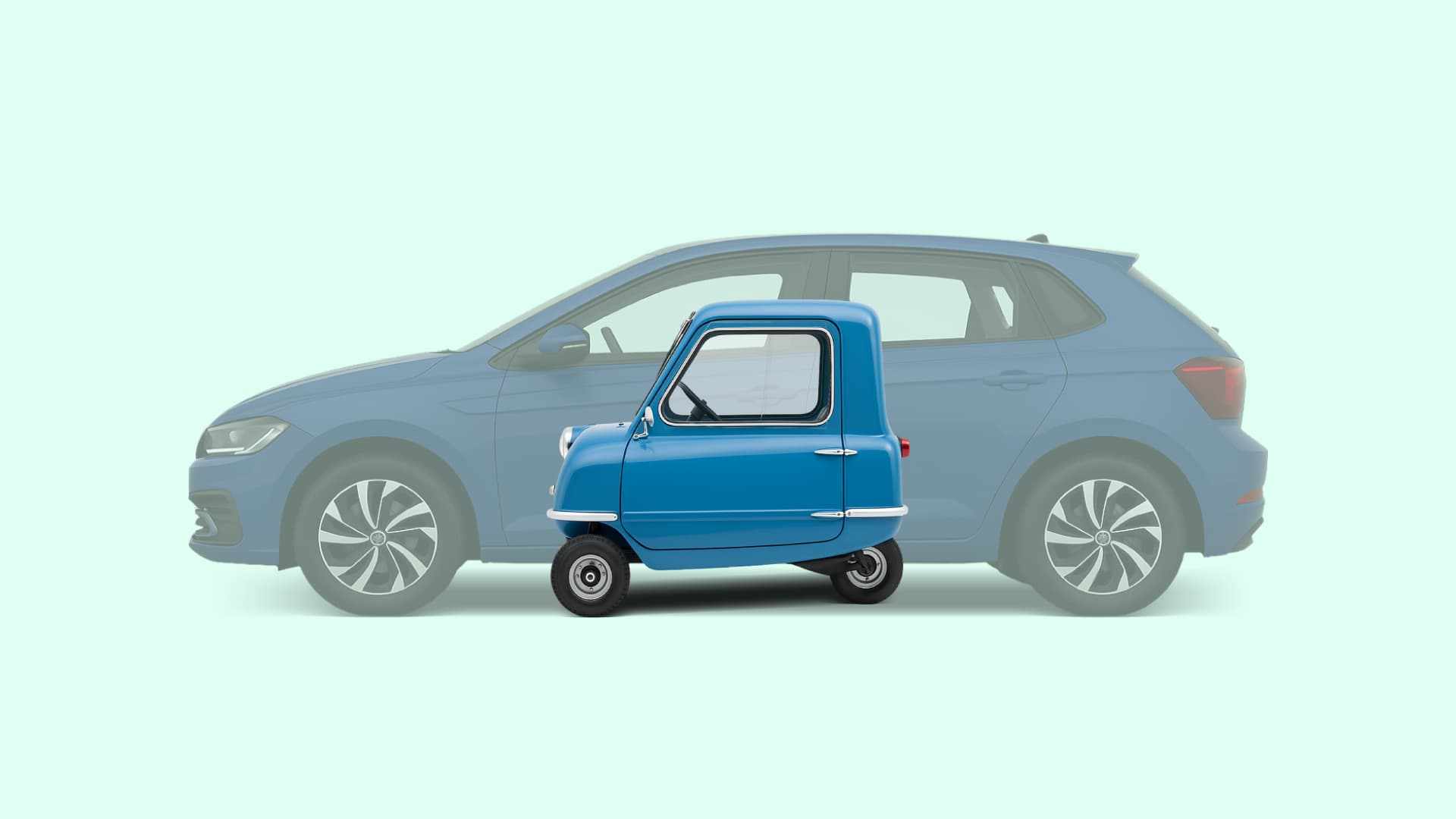
- Length: 407.4 cm (160.4 in)
- Body width: 175.1 cm (68.9 in)
- Height: 145.1 cm (57.1 in)
The Polo is a tiny bit shorter and slimmer than the Sandero, and it feels small… until you compare it to a P50, which it outsizes in every possible direction. A Polo is 3× longer, 1.7× wider, and has a wheelbase more than twice the length of the entire Peel.
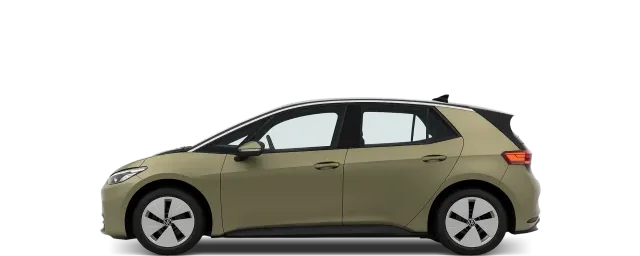
Volkswagen ID.3 (2023) — the modern electric hatch
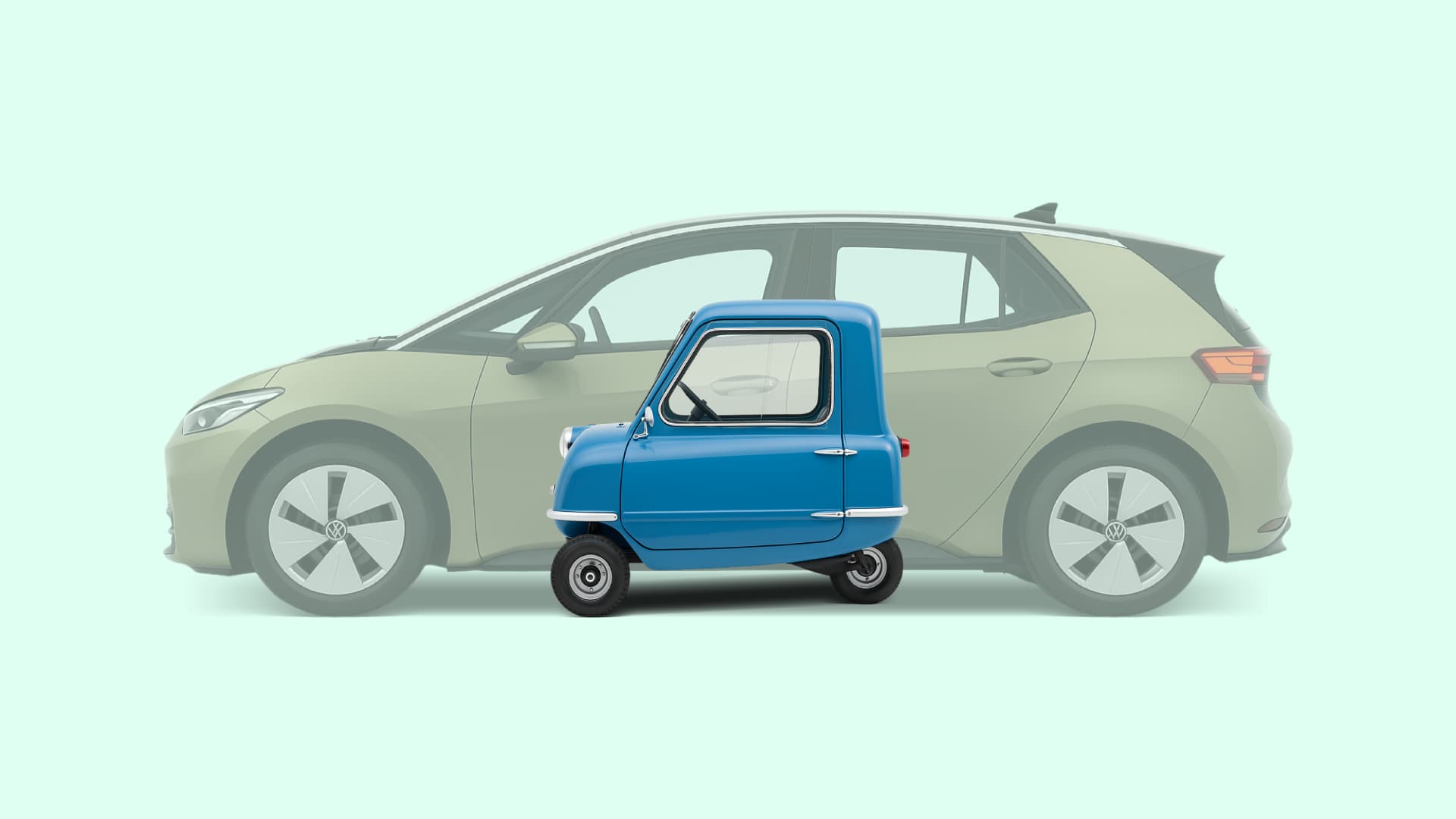
- Length: 426.4 cm (167.9 in)
- Body width: 180.9 cm (71.2 in)
- Height: 156.4 cm (61.6 in)
The ID.3 towers over the P50 like a city bus over a bicycle. It’s 3.1× longer, 1.7× wider, and almost 40 cm (15.7 in) taller. Its 385 L boot is enough to carry… well, several P50s’ worth of belongings.
So… how tiny is the P50 vs Modern Hatchbacks? (The big numbers)
- Length: Modern hatchbacks are 3–3.5× longer
- Body width: Modern hatchbacks are around 1.7× wider
- Height: Most hatchbacks are 25–35 cm taller
- Boot space: The Peel has no boot space, these hatchbacks have 300–1200 L
- Weight: The P50 is just 59 kg (130 lb); even a one-tonne hatchback is about 17× heavier
- Turning circle: P50 wins — 3.66 m (12.0 ft) is absurdly tight!
Should tiny cars make a comeback?
The P50 showed that extreme downsizing is possible, and in theory, tiny cars could cut congestion, lower energy use and free up urban space. In practice, crash safety rules, EV battery bulk and our appetite for comfort make them hard to build today.
So while the idea of ultra-small cars is appealing, the trend is moving the other way. For a deeper look at how and why, see our ‘Autobesity’ article.
FAQs
Frequently asked questions

About the author
Automotive Size Guide Writer and Designer
Ben is a writer and designer at DriveSize, which he has run with Laurence since its launch in 2025. He covers practical vehicle size comparisons, boot and cargo space, parking fit, ground clearance, and the changing dimensions of SUVs, EVs and pickups. His writing focuses on how a car's exterior size relates to its usable space and what those measurements mean for everyday driving. Ben aims to help our readers understand the trade-offs between passenger room, cargo capacity and ease of manoeuvring without treating the largest vehicle or biggest figure as the automatic winner.