
1962 Peel P50 dimensions and size guide
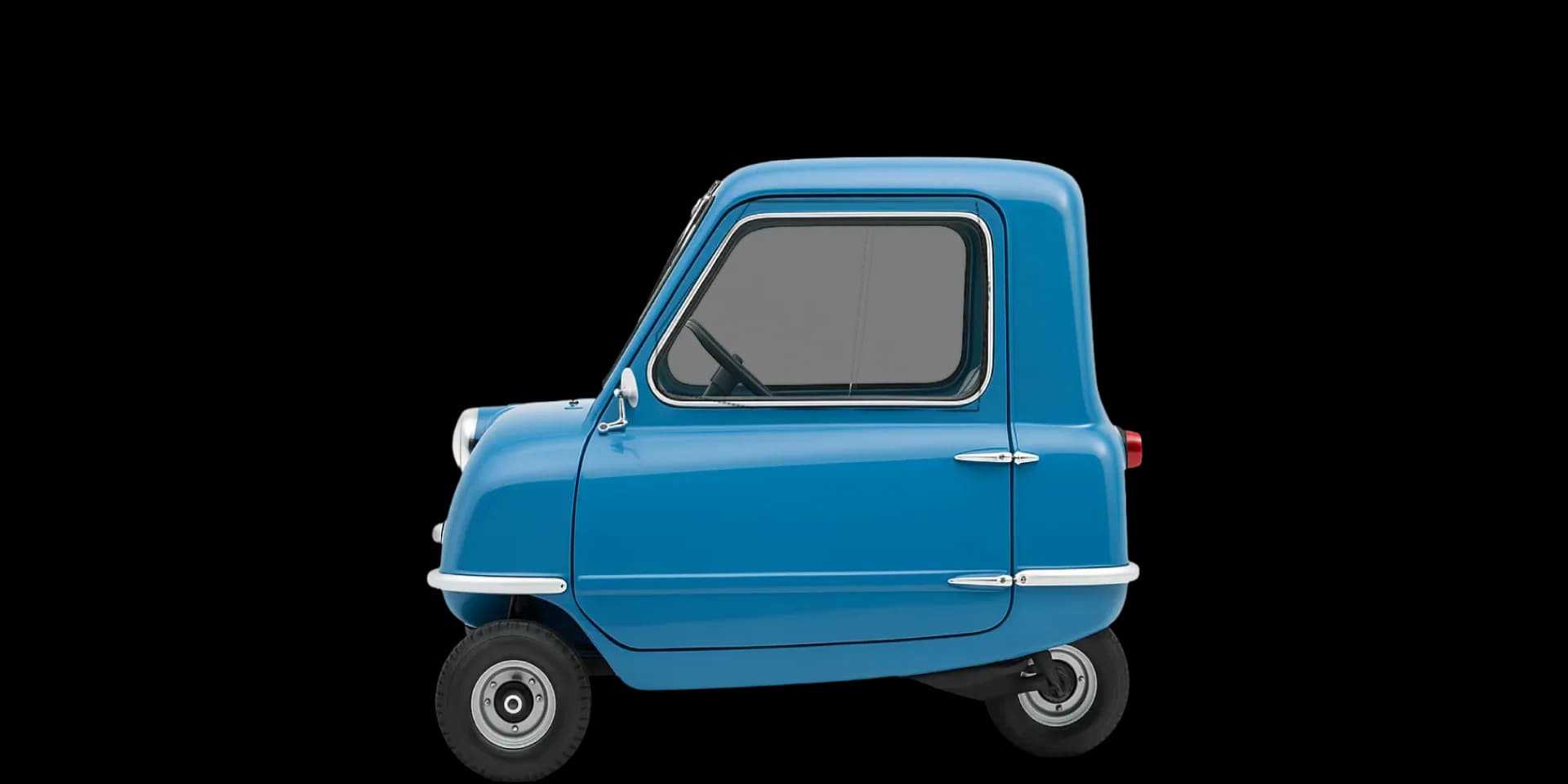
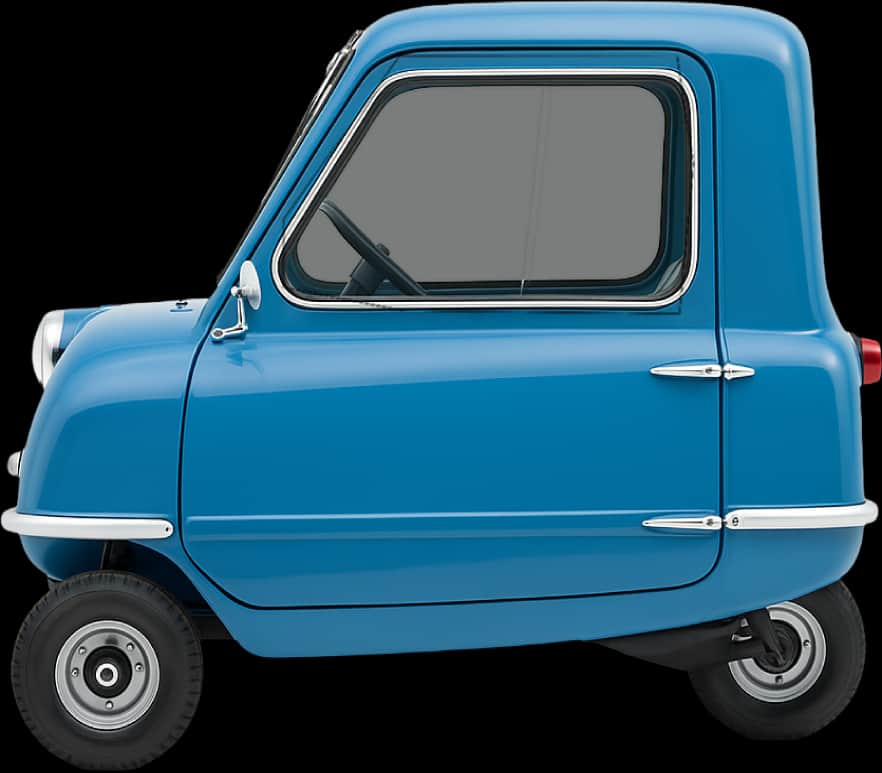
1962 Peel P50
 Add comparison
Exterior dimensions
1962 Peel P50 exterior dimensions
The 1962 Peel P50 is dramatically smaller than the average microcar. At 137.2cm long, it is around 162cm, or 54%, shorter than the class average, while its body width of 99.1cm is approximately 48cm, or 33%, narrower. Its 120cm height is also about 36cm, or 23%, lower. Together, its length and width create a footprint of only 1.36m². That is around 3.1m², or 69%, smaller than the average, meaning the P50 occupies less than one-third of the ground space of a typical microcar. Its 120cm wheelbase is the same as its height and only 17.2cm shorter than the entire body, leaving very little length beyond the wheels.
Measurements
Length
137.2 cm
Body width
99.1 cm
Height
120 cm
Wheelbase
120 cm
Ground clearance
12.7 cm
Footprint
DriveSize footprint is overall length multiplied by body width.
1.4 m²
How the 1962 Peel P50's exterior dimensions compare with the average Microcar
Length
161.7 cm shorter than the average Microcar
Body width
48.2 cm narrower than the average Microcar
Height
36 cm shorter than the average Microcar
Wheelbase
86.7 cm shorter wheelbase than the average Microcar
Ground clearance
1.5 cm less ground clearance than the average Microcar
DriveSize footprint
DriveSize footprint compares this car's footprint with the average footprint for the same class.
A positive percentage means a larger footprint and a negative percentage means a smaller footprint. About average means the rounded difference is 0%.
-69%
Smaller footprint than the average Microcar
Fast facts
Fast facts
Its footprint is 69% smaller than average
The P50 occupies only 1.36m² of ground space, less than one-third of a standard sized microcar.
The turning circle is 56% tighter
At just 3.66m, it needs around 4.6m less space to turn than the average microcar, which is a huge advantage for turning in even the narrowest spots.
The wheelbase matches the car's height
Both measure 120cm, while only 17.2cm separates the wheelbase from the P50's total length.
Every regional parking space is spacious
All eight standard size spaces used by DriveSize provide very comfortable surrounding room for the P50 when its parked.
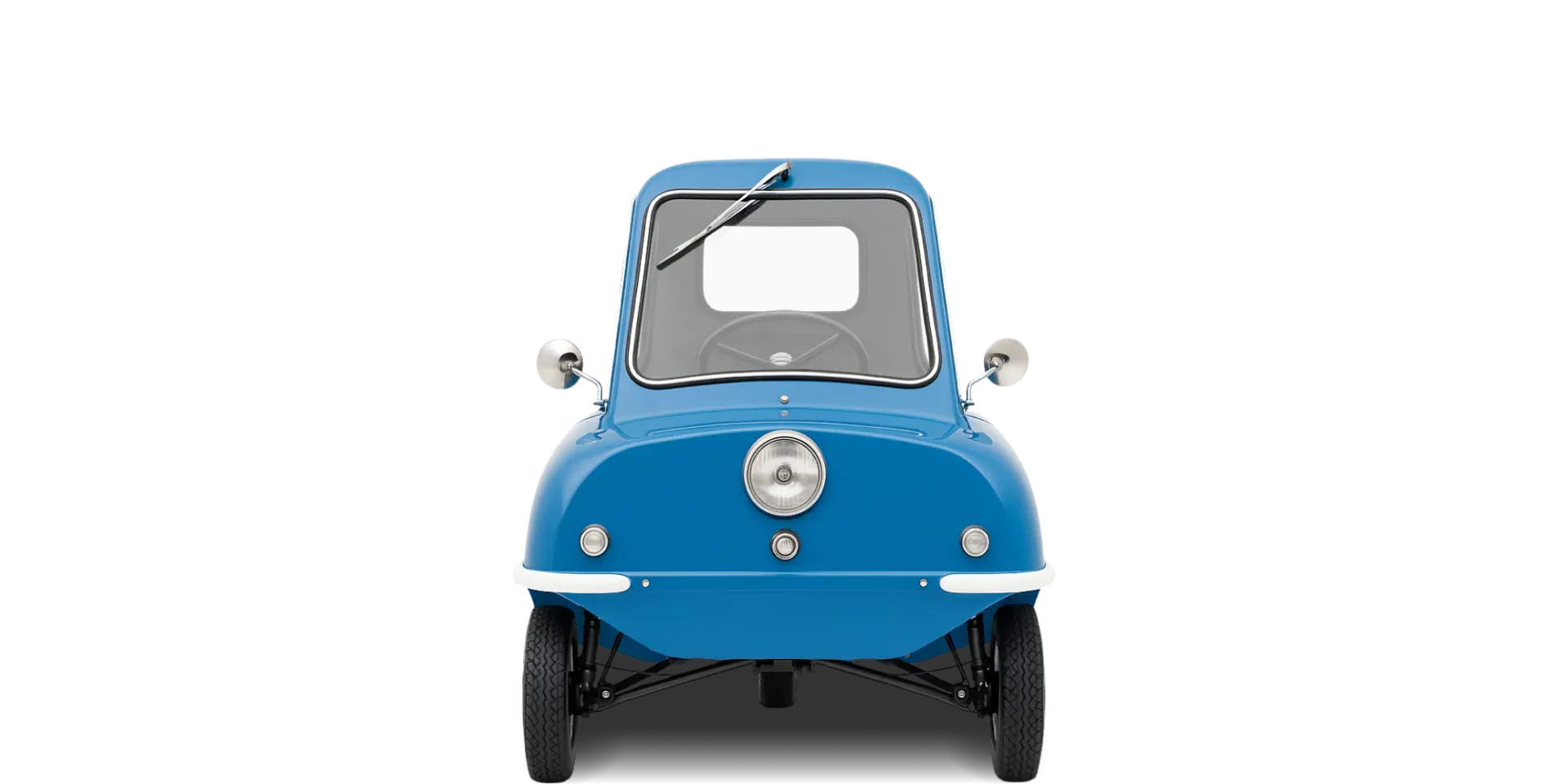
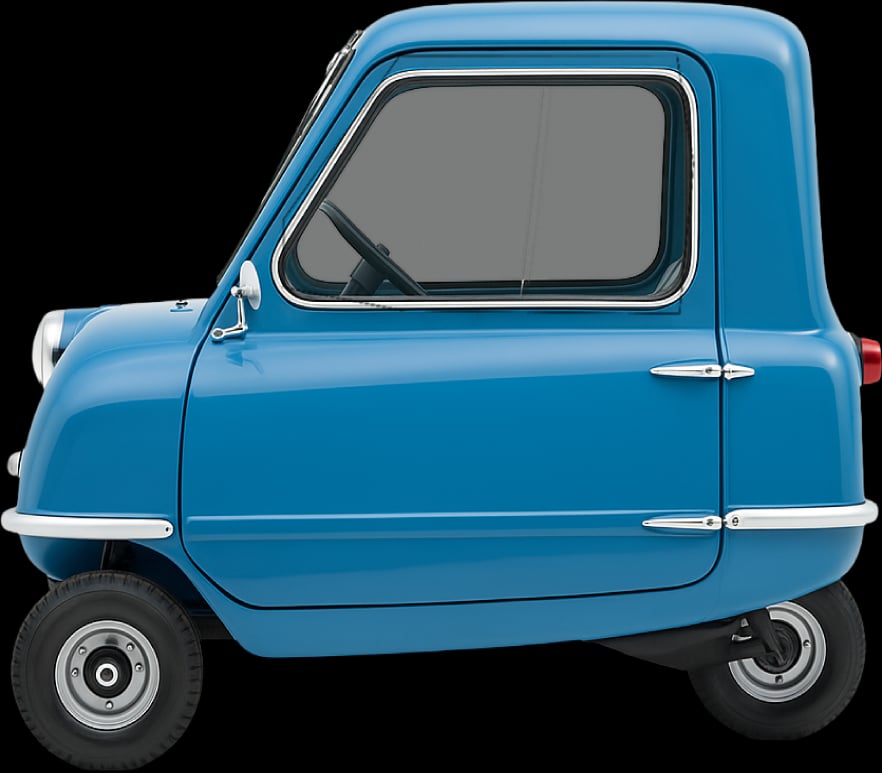
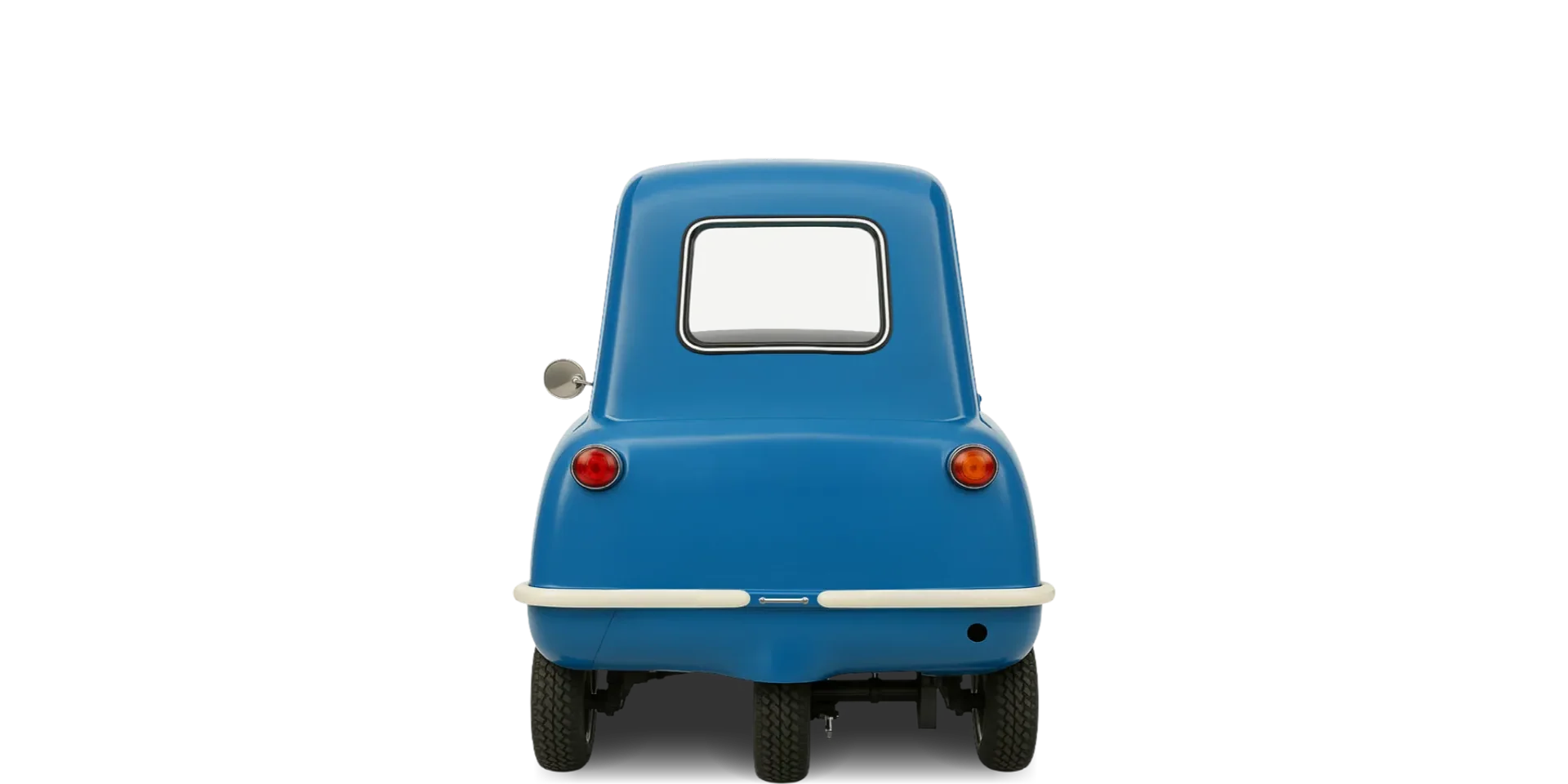
1962 Peel P50 front view
Cargo space & efficiency
1962 Peel P50 cargo capacity and space efficiency
The P50's one-seat, one-door layout is contained within a footprint of just 1.36m², around 69% smaller than the microcar average. Its exterior is therefore focused on carrying one person while occupying the least possible ground space.
Parking
Will the 1962 Peel P50 fit in a standard parking space?
The Peel P50 fits all eight standard regional parking spaces used by DriveSize, with comfortable surrounding room in every one. Its length and width are both well below the microcar norm, making parking-space boundaries almost non-existent compared to a typical car. Its footprint is around 69% smaller than the microcar average. This leaves substantial spare space around the vehicle in the United Kingdom, European Union, USA/Canada, China, India, Japan, Australia and the Middle East standard parking spaces.
DriveSize parking fit score
DriveSize compares the car's width and length with typical parking-space sizes by region.
Vehicle dimensions are rounded up and available side or length clearance is rounded down.
Side clearance is based on body width where available; real spaces can vary because of mirrors, walls, pillars, kerbs, bay markings, and nearby cars.
For an average USA / Canada space: body side clearance is 87.5 cm per side, and length clearance is 206 cm at each end.
Body side clearance
87.5 cm
Length clearance (at each end)
206 cm
Usability
1962 Peel P50 usability & manoeuvrability
At 3.66m, the P50's turning circle is around 4.6m, or 56%, tighter than the microcar average. Combined with its 120cm wheelbase, this makes the car particularly easy to turn around in confined streets or small parking areas. Its 59kg kerb weight is approximately 643kg, or 92%, below the class norm. Ground clearance is 12.7cm, around 1.5cm, or 11%, lower than average, so tall speed humps and abrupt ramp crests require more care than they would in a typical microcar.
Measurements
Doors
1
Max seats
1
Turning circle
3.7 m
Curb weight
59 kg
How the 1962 Peel P50's usability and manoeuvrability compare with the average Microcar
Turning circle
4.6 m smaller turning circle than the average Microcar
Curb weight
643 kg lighter than the average Microcar
DriveSize manoeuvrability
DriveSize manoeuvrability combines turning circle and footprint, with turning circle weighted more heavily.
A positive percentage means more manoeuvrable than the class average and a negative percentage means less manoeuvrable.
+2%
More manoeuvrable than the average Microcar
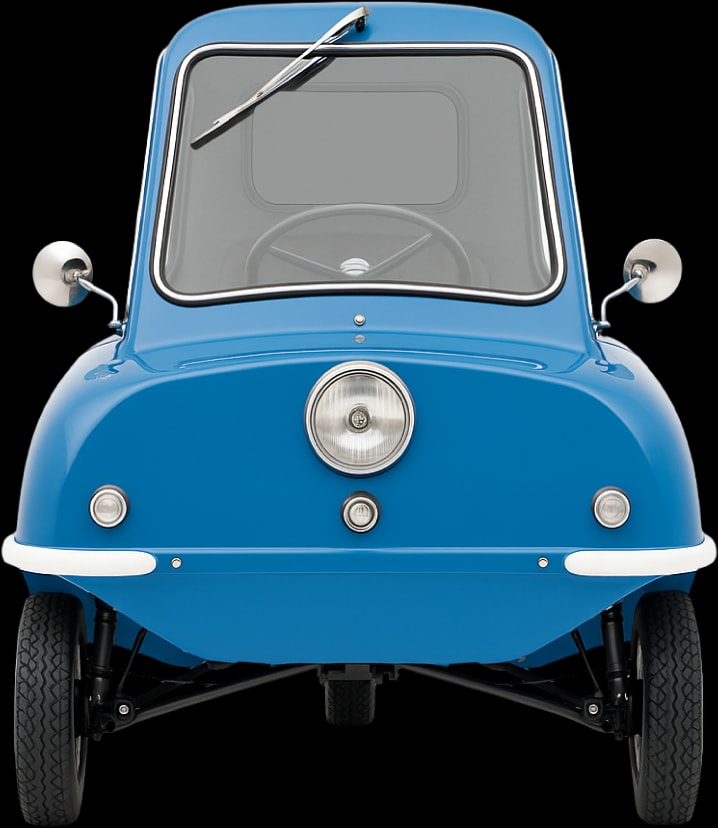
1962 Peel P50 rear view
DriveSize overview: 1962 Peel P50
Based on its dimensions, the Peel P50 may suit a driver whose priority is travelling alone in the smallest possible footprint. It occupies less than one-third of the ground space of the average microcar, fits very comfortably in all eight regional parking spaces and has a turning circle around 56% tighter than the class norm.
Its most distinctive proportion is a 120cm wheelbase within a body only 137.2cm long, leaving very little length beyond the wheels. The single seat and ground clearance around 11% below average are the main practical compromises.
Compare the tiny P50 to the giant 2024 Tesla Cybertruck for a true size difference.
More Microcars
Articles featuring this car
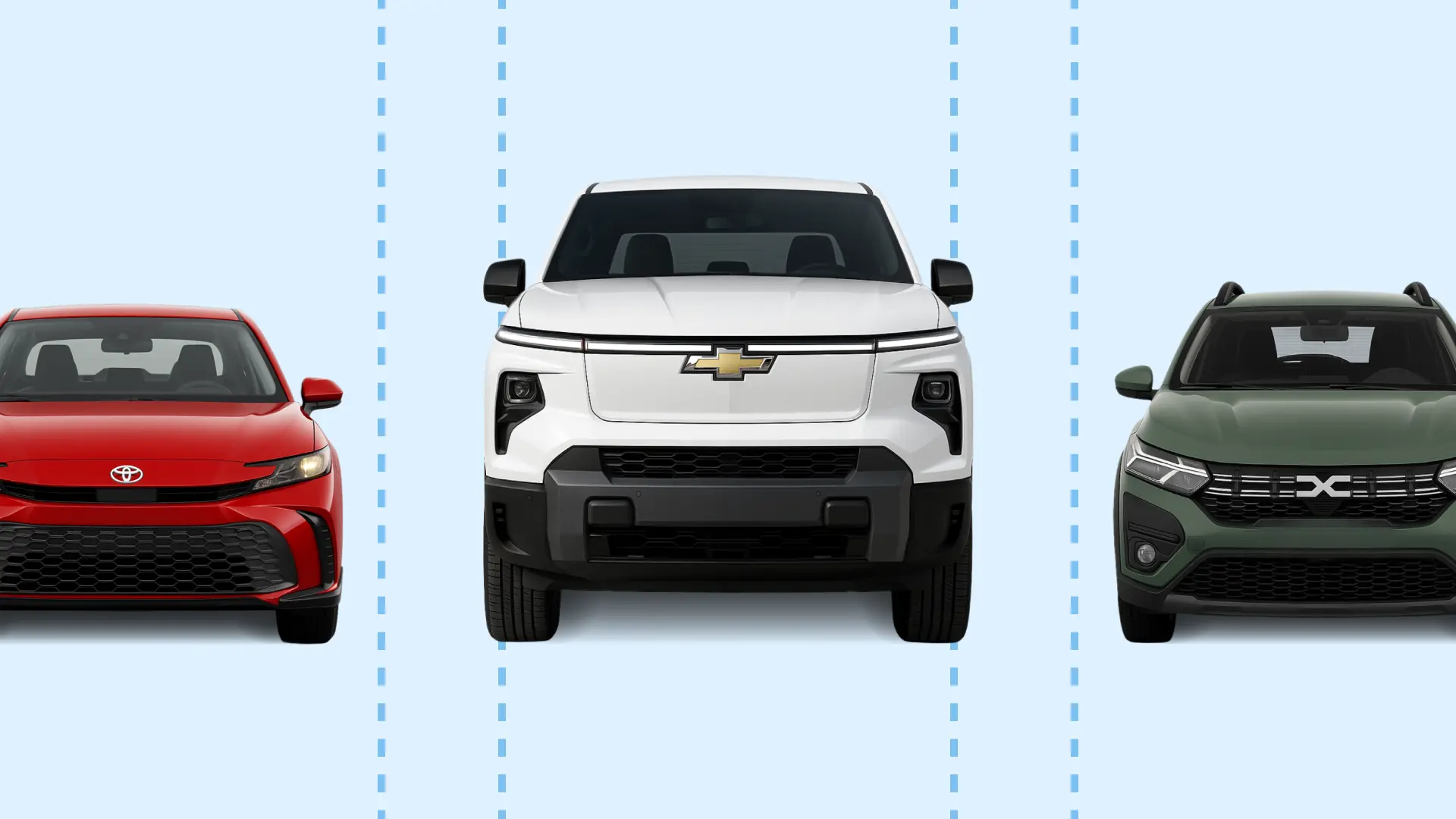
Will Your Car Fit in a Standard Parking Space? Parking Space Sizes Explained
Find out if your car will fit in a standard parking space. Compare UK, US and international parking bay sizes, and check real vehicle fit with DriveSize.
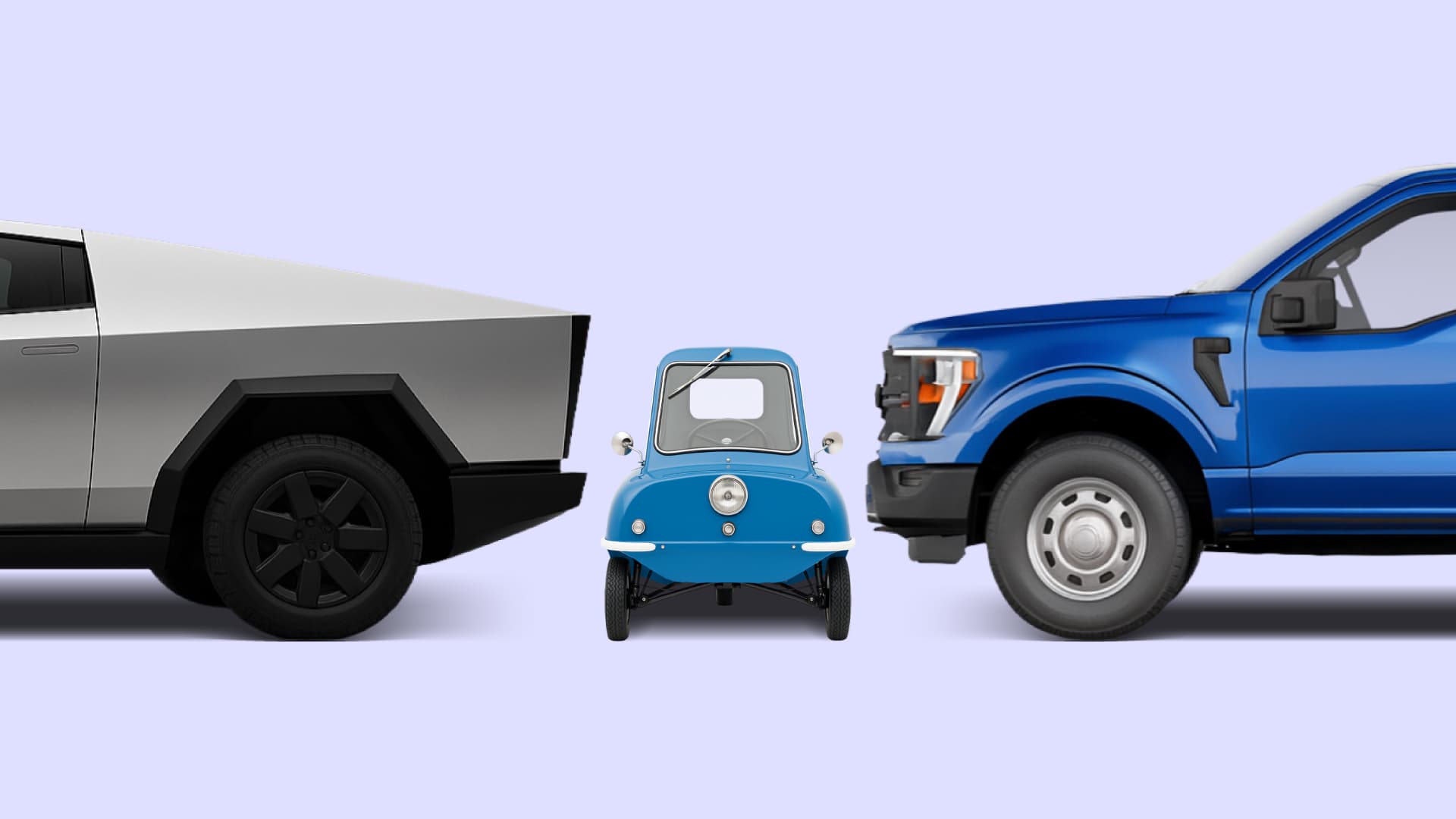
Smallest Car vs the Giants: Peel P50 vs Cybertruck, F-150, Land Cruiser, Palisade & Wrangler
How tiny is the Peel P50 really? See it compared with giants like the Cybertruck, F-150, Land Cruiser, Palisade and Wrangler using real dimensions.
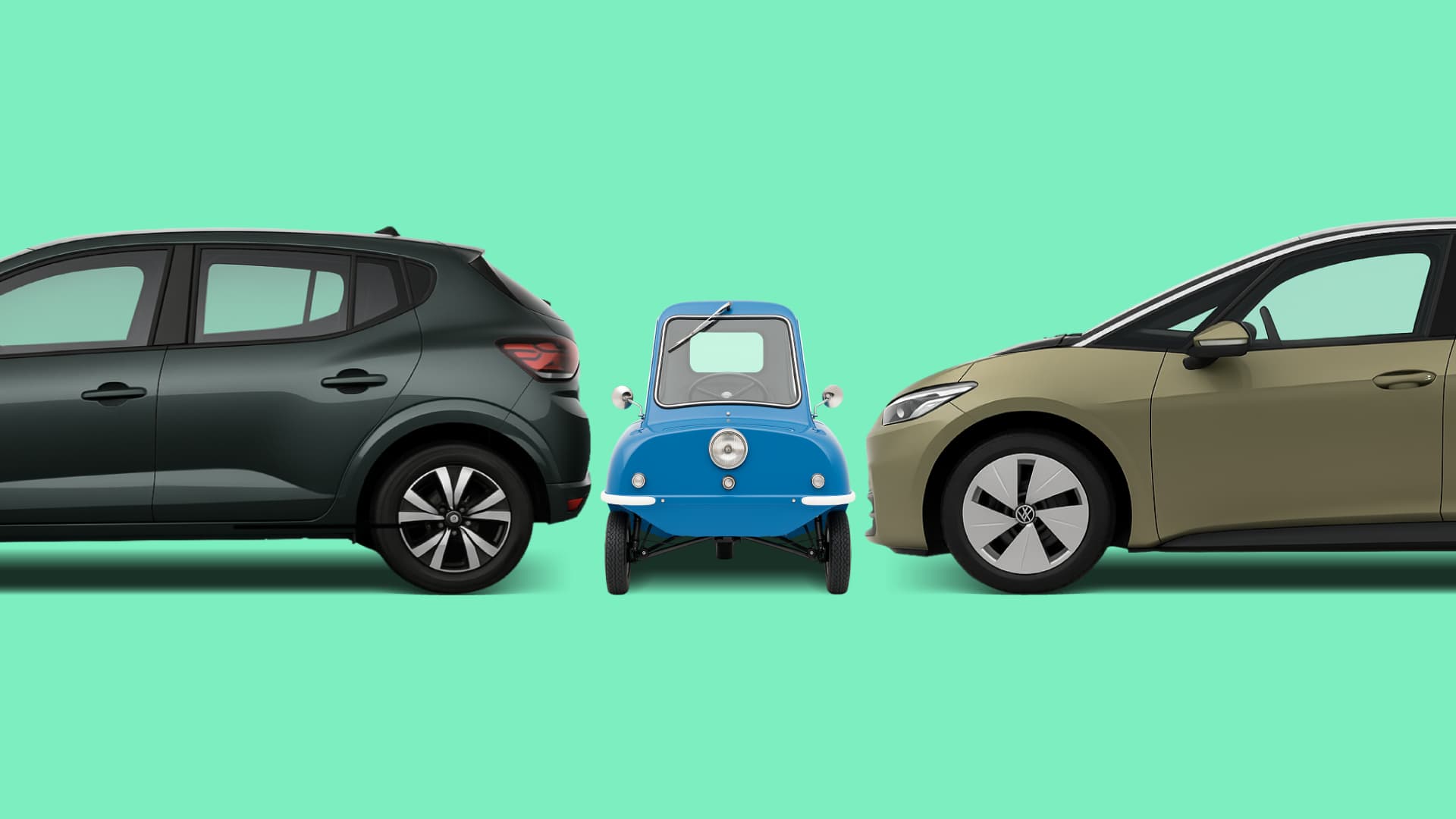
Smallest Car in the World? Peel P50 vs Today’s City Cars (Sandero, Golf & More)
How tiny is the Peel P50? See it compared to today’s city cars including the VW Golf, Toyota Corolla, Dacia Sandero, VW Polo and ID.3 in real dimensions.
FAQs
Frequently asked questions
Vehicle specifications on this page are sourced from official Peel documentation. Unless the page identifies a specific trim, body style, powertrain or market version, DriveSize uses manufacturer-published specifications for the base model as its default reference. DriveSize standardises the published measurements and calculates the comparisons and derived figures shown. Figures can vary by market, model year, trim, powertrain, wheels, tyres and measurement method. How DriveSize sources and calculates these figures.