
Ford models



About Ford
Ford Dimensions: Engineering for Scale and Versatility
Ford’s approach to vehicle dimensions is rooted in a philosophy of "purposeful scale." Unlike brands that prioritise uniform aesthetics, Ford engineers its footprints based on specific utility profiles ranging from the urban agility of the Ford Puma to the uncompromising, full-size presence of the Ford Expedition. At DriveSize, we move beyond simple length and width to explain how Ford’s chassis geometry dictates daily practicality.
Reclaiming the Footprint: Storage Innovations
Ford has led the industry in redefining internal volume through clever secondary storage solutions. In the electric transition, the removal of the internal combustion engine hasn't just simplified the drivetrain; it has fundamentally altered the vehicle's "working volume".
The MegaBox & GigaBox: In the compact Ford Puma, Ford introduced the MegaBox, a deep, waterproof 80-litre compartment recessed into the boot floor. Our data shows how this affects vertical loading, allowing items up to 115cm tall to stand upright in a vehicle that otherwise has a modest roofline.
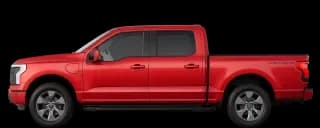
The Mega Power Frunk: In the Ford F-150 Lightning, the traditional engine bay is now a 400-litre "frunk." By adding this additional volume alongside the rear bed, you can see that an EV's utility often exceeds its ICE counterparts, even when the vehicle length remains the same.
The FlexBed System: In the Ford Maverick, dimensions are about customisation. Even with a shorter length than a full-size truck, the Maverick’s bed is engineered for tiered storage, proving that a smaller external footprint can still outperform larger trucks for storage.
Navigating Proportions and Practicality
To understand Ford dimensions, it’s worth looking at the relationship between the exterior footprint and cabin accessibility.
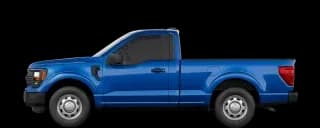
Width & Clearance: For full-size models like the F-150 range, knowing the minimum width with mirrors extended is essential for ensuring a fit in standard residential garages or narrow driveways.
Sliding Versatility: In the Ford Kuga, the minimum cargo capacity is dynamic. With sliding rear seats that adjust by up to 15cm, the Kuga allows you to prioritise legroom or luggage volume without changing the car's physical footprint.
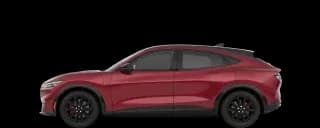
Maneuverability: We list the minimum turning circle across the range, comparing the agile Mustang Mach-E against traditional pickups to help you see which Ford is best suited for which environment, from tight city streets to open worksites.
From the nimble Puma to the high-output F-150, our guides provide the precision measurements needed to visualise how every Ford model could fit into your life.